
Practical SpineOn advice
Back pain and returning to movement: rest, exercise, or wait?
When your back starts to hurt, the natural response is often to limit movement. A brief period of rest may be reasonable, but avoiding every activity for a long time is often not the best way forward. It is important to know what to adjust, what to monitor, and when trial and error is no longer enough.
Expertly reviewed by SpineOn
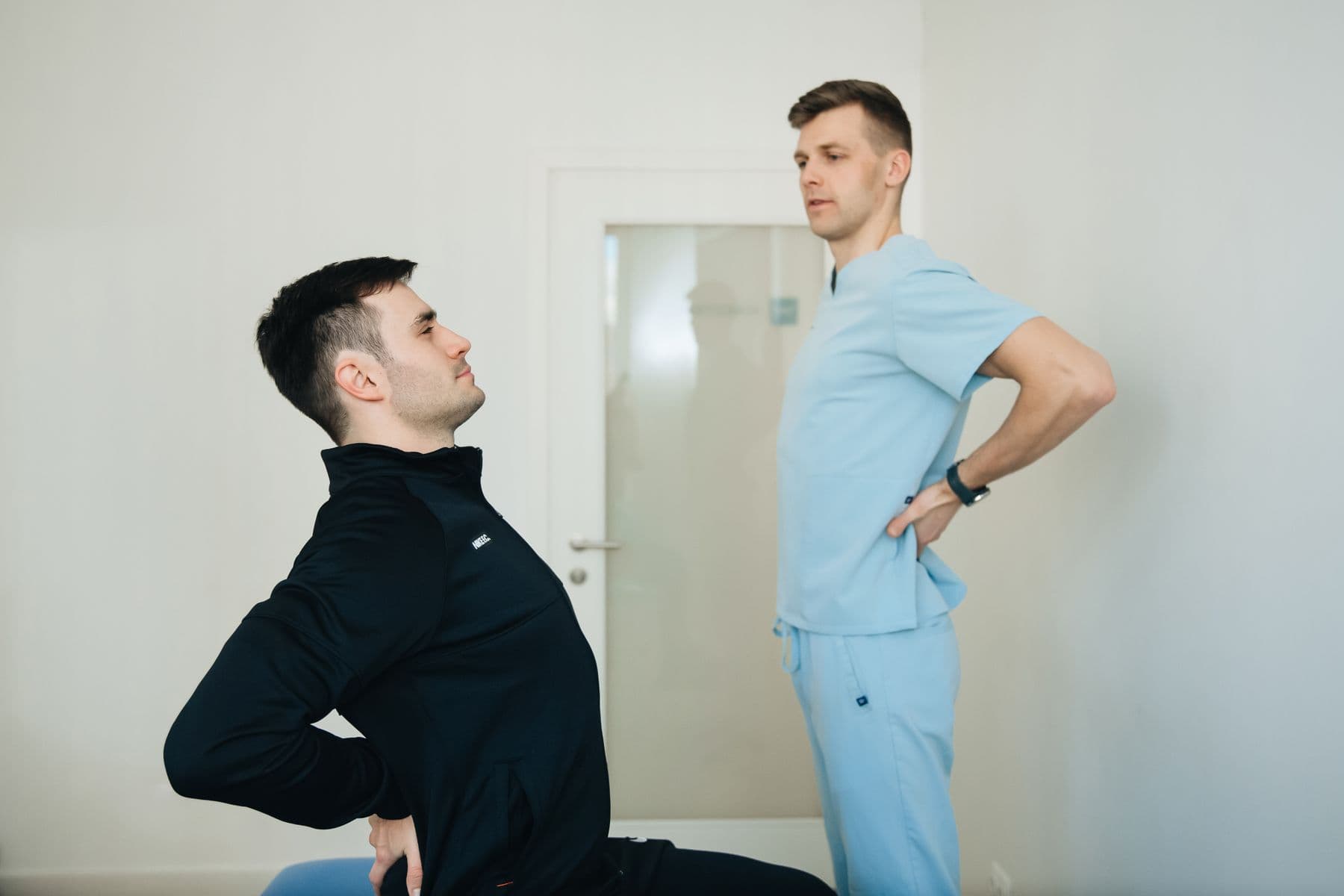
Pain does not automatically mean a complete ban on movement
During a common episode of back pain, it makes sense to remain reasonably active and continue normal daily activities where possible. This does not mean ignoring pain or carrying on at any cost. It means finding the movement and intensity that your body can currently tolerate.
Prolonged bed rest can lead to further stiffness, reduced fitness, and greater uncertainty when returning to normal activities. On the other hand, training aggressively through significant pain is not proof of discipline. A more sensible route lies between these extremes: temporarily adjust the load, maintain tolerable movement, and gradually return to more demanding activities.
Assess the body's response rather than one pain score
Pain intensity alone does not tell the whole story. When deciding how to move, it is also useful to observe how the pain behaves:
- does the pain appear only during a specific movement, or does it continue afterwards,
- does the condition return to its starting level soon afterwards, or does the flare-up persist into the next day,
- does the pain remain in one place, or does it begin to radiate into an arm or leg,
- does movement gradually improve, or does the available range keep decreasing,
- does numbness, weakness, or altered sensation develop.
A mild, short-lived increase in sensitivity after activity does not automatically mean damage. If the response increases significantly, lasts for a long time, or the nature of the symptoms changes, however, the load should be reconsidered.
A practical return to movement in four steps
1. Maintain normal movement that is tolerable
You can begin with walking, light household activities, or simple movement within a range that does not worsen your condition. Completely stopping all activity should be the exception rather than the automatic solution.
2. Temporarily reduce only the problematic part of the load
If pain is triggered, for example, by a deep forward bend with a heavy weight, it does not necessarily mean you have to stop training your entire body. You can reduce the weight, range, or number of repetitions, or choose a different version of the exercise. When running, you can temporarily shorten the distance or replace part of the session with walking or cycling.
3. Increase one thing at a time
When returning, do not add weight, volume, speed, and frequency all at once. Changing one variable makes it easier to assess how your body responds. If your condition remains stable, you can add the next step gradually.
4. Assess function, not only immediate relief
Less pain is not the only positive sign. It is also important to notice whether walking, sitting, sleeping, working, range of movement, and confidence in everyday activities are improving.

Why random exercises from the internet may not be enough
The same problem label can have a different course. One person may first need to reduce irritation and restore tolerable movement, while another needs to gradually increase strength and endurance. A universal routine may therefore help one person, do nothing for another, and make a third person's symptoms worse.
For long-term non-specific back pain, SpineOn uses a combination of a clear explanation of the problem, movement, and an individually tailored plan. Manual therapy or massage can form part of care, but they do not replace active work with movement and load.
At SpineOn, the plan is based on the initial assessment, spinal function, and the response to controlled load. Depending on the situation, this may be followed by lower back therapy, neck therapy, or functional testing of the deep spinal muscles.
When not to adjust movement on your own
With certain symptoms, it is advisable not to rely only on adjusting your training. Urgent medical assessment is particularly important with a new loss of bladder or bowel control, loss of sensation around the genitals or anus, or significant weakness and numbness in both legs.
Earlier professional assessment also makes sense for pain after a serious injury, rapid worsening, fever, unexplained weight loss, severe pain at night, progressive weakness, or symptoms that change and do not respond to a reasonable adjustment of load.
Interactive traffic light
How does your body respond after movement?
Choose the situation that most closely resembles your response after activity. The result provides practical guidance and does not replace an assessment.
The response is brief and the condition settles
Mild sensitivity during movement or shortly afterwards does not necessarily mean that you need to stop the activity completely. What matters is that the condition returns to its starting level and does not develop in a worse direction.
- Maintain tolerable movement
- Increase the load gradually
- Monitor the response on the following day as well
Frequently asked questions
Select a question to expand the answer. Only one answer remains open at a time.