
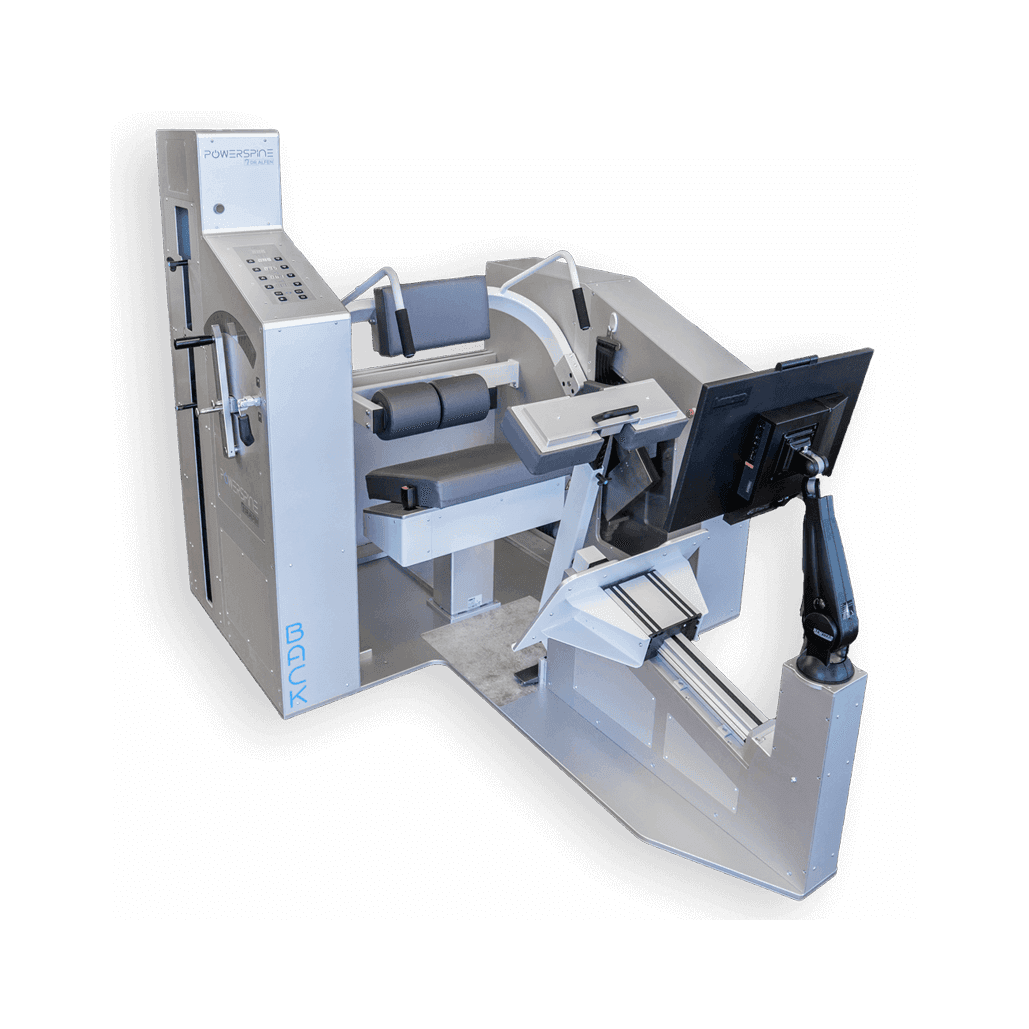
PowerSpine Back
For the lower back
The device focuses on the lumbar spine area. It may make sense especially with recurring lower back pain, a feeling of instability, or symptoms returning after standard rehabilitation.
PowerSpine technology
Most people first try what is easiest to access when their back or neck hurts: massage, medication, rehabilitation, exercise, or rest. Sometimes it helps. Sometimes only for a while. Then the problem returns.
That is when it can make sense to look deeper. Not only at where it hurts, but also at why the spine may not be stabilizing well enough.
Book an initial assessmentAt SpineOn, we use PowerSpine technology to support targeted work with the deep stabilizing muscles of the spine. These muscles are important for proper back function, but during common exercise they may not always be engaged precisely enough.
If the deep spinal muscles do not work as they should, the body may compensate in other ways. It can use stronger superficial muscles, the legs, glutes, shoulders, or neck. From the outside the movement may be completed, but the spine still may not have the support it needs.
That is why some patients exercise, attend rehabilitation, try different approaches, and still feel that their back is not firm, reliable, or stable.
PowerSpine Back
The device focuses on the lumbar spine area. It may make sense especially with recurring lower back pain, a feeling of instability, or symptoms returning after standard rehabilitation.
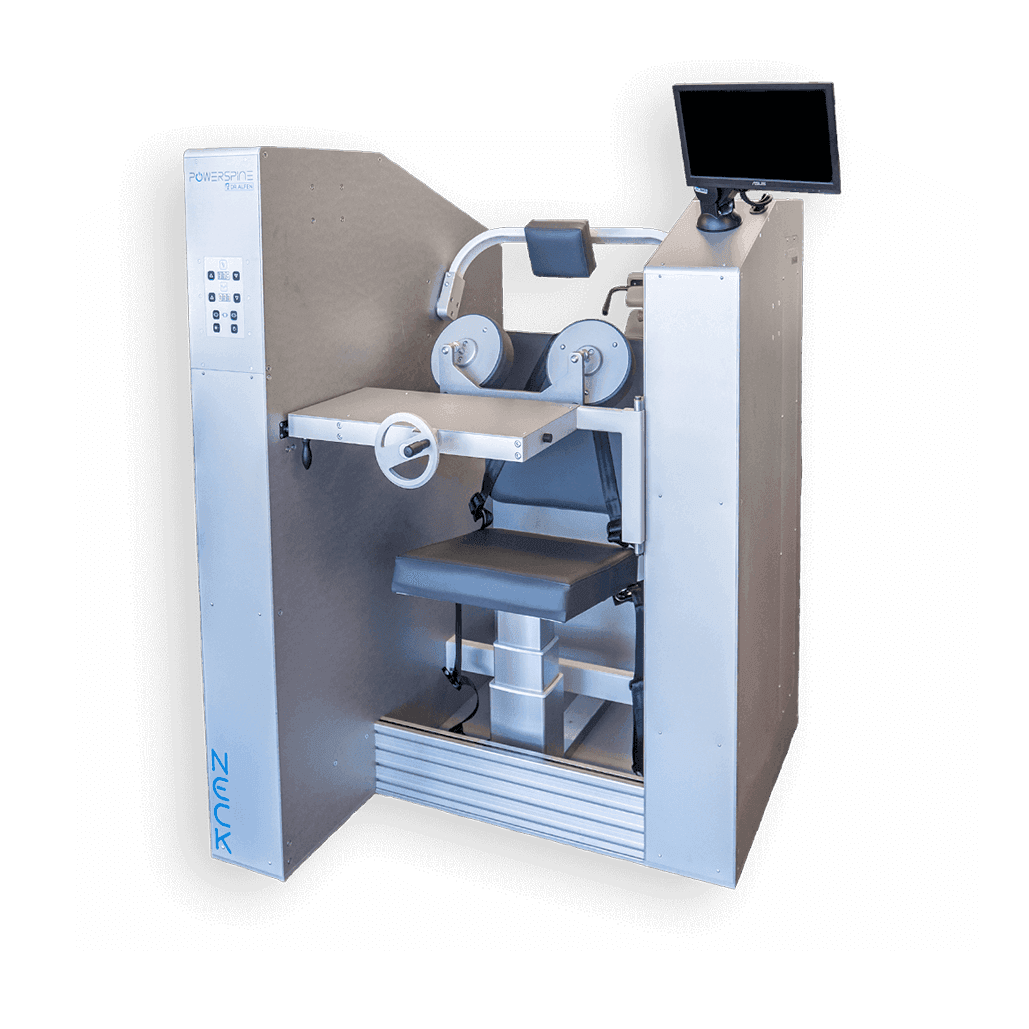
PowerSpine Neck
The device is designed for the cervical spine and upper back area. It may be suitable for neck pain, a stiff neck, tension, or difficulties related to sedentary work.
PowerSpine is not a standard fitness machine. It is part of assessment and therapy that is set according to the individual patient. Therapy is not about doing as much exercise as possible. The important point is to exercise correctly, safely, and under control.
During training, the body is stabilized so movement can focus more on the muscles that should support the spine.
The process is adjusted to the condition, symptoms, and abilities of the individual person, not to a universal template.
Therapy has a clearer and more trackable course, so the patient is not only trying another random method.
PowerSpine may make sense especially if you have recurring lower back pain, neck pain, a stiff neck, a feeling of instability, or symptoms that return after standard rehabilitation.
It may also be suitable for patients who already have an MRI or CT finding and want to understand whether a conservative approach exists before considering further options.
It is not an automatic solution for everyone. That is why SpineOn starts with an initial assessment, not with the machine.
At the start, we need to understand what hurts, how long the problem has lasted, what makes it worse, whether pain radiates, and what you have already tried. If you have MRI, CT, or other documentation, bring it with you.
Only after assessing your condition can we say whether PowerSpine is suitable for you and what process makes sense.
The goal is not to add another random exercise. The goal is to find the weak point, set therapy, and proceed in a controlled way.
Current pages use PowerSpine device photos. Photos of the new SpineOn space will be added after the clinic moves.
No. Suitability is assessed only after the initial assessment, based on symptoms, findings, safety, and therapy goals.
Start with an initial assessment that helps evaluate whether PowerSpine makes sense for you.
Book an initial assessment